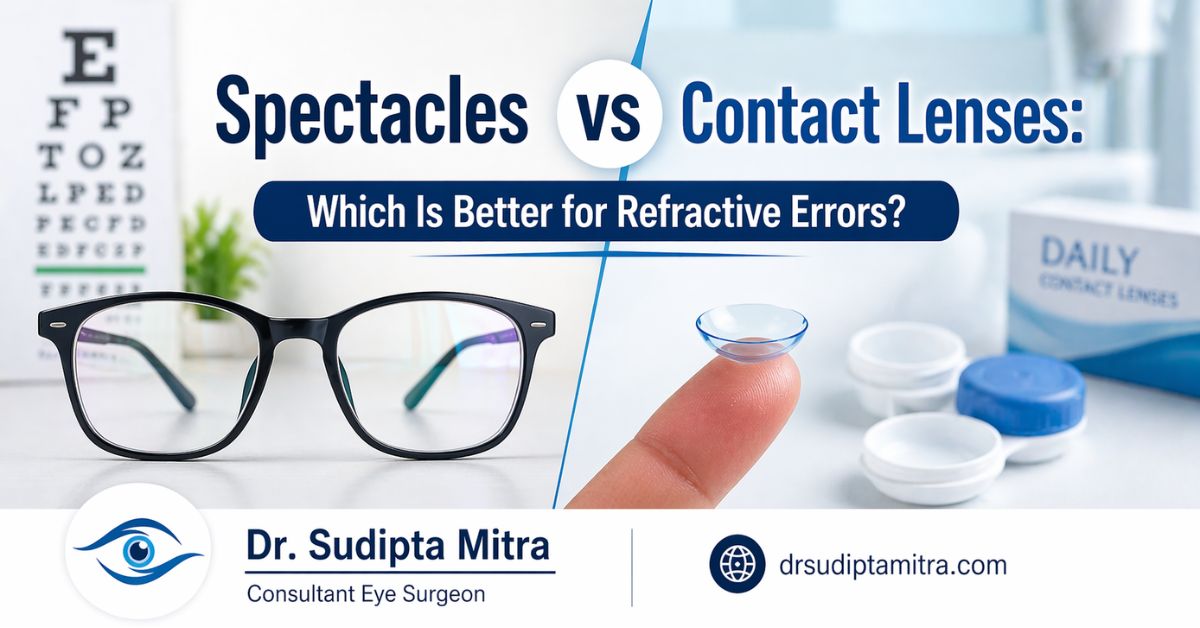
Most individuals, regardless of age, experience issues with how their eyes bend light. When focusing fails, clarity fades – this shows up as nearsightedness, farsightedness, irregular corneal shape, or ageing-related stiffness. Instead of sharp images, sight turns hazy due to mismatched refraction. Correction arrives quietly through external tools: glasses serve some, while others rely on thin lenses resting atop the eye.
Yet still, questions arise about spectacles versus contact lenses for fixing vision problems. One option suits active routines, another fits sensitive eyes. Lifestyle shapes what works. Comfort matters just as much as how well each corrects sight. Personal habits guide long-term use more than general advice ever could. Eye health sometimes limits choices without clear warning. Differences between them become obvious only when tried firsthand.
Understanding Spectacles
One way people manage vision issues is through eyewear often called spectacles. These devices feature custom lenses held by a structure supported on the bridge of the nose and over the ears. While simple in concept, their design allows precise optical correction. From afar, they appear unremarkable – yet function depends heavily on accurate lens specifications. For many, this approach remains the first choice when clarity becomes necessary.
Light bends differently when passing through lenses, shaping its path toward proper focus. This shift allows clearer sight by aligning images precisely on the retina. Vision gains sharpness as the eye receives adjusted signals from modified light angles.
Advantages of Spectacles
What stands out about eyeglasses is how simple they are to operate. Removal or placement takes only moments, requiring no complex steps.
One advantage lies in minimal upkeep. With routine lens cleaning and correct storage, their condition often remains satisfactory. What matters most shows up over time through consistent care practices.
When it comes to safety, spectacles hold an advantage by avoiding touch with the eye itself. Infection chances drop sharply because there is no physical interaction with ocular tissue.
Another key reason glasses stand out is their lower long-term expense when set beside contact lenses. Their advantage grows since replacements happen far less often.
Not only do glasses correct sight, but they also reflect personal style. Today’s designs appear in many forms – each differing in outline or shade – to match individual taste without sacrificing function.
Limitations of Spectacles
Despite their benefits, spectacles have certain drawbacks.
At times, side visibility becomes limited due to the lens placement being set apart from the eye.
Fogging often occurs on lenses when temperatures shift suddenly – stepping into cooled spaces, for instance, or while using facial coverings. Cold surfaces meet warm, moist air; condensation forms without warning. This happens indoors just as easily as outdoors, especially where climate control alters airflow. A sudden drop in ambient warmth catches the glass off guard, mist appearing where clarity once was.
When engaging in physical activity, wearing glasses might lead to discomfort due to shifting or dropping. Movement increases the chance of damage when eyewear is involved. During sport, adjustments become frequent if frames do not stay fixed. Slippage occurs more often under exertion, disrupting focus. Broken lenses or bent arms may result from sudden impacts. Stability becomes a concern whenever motion intensifies.
Yet appearances concern certain individuals when wearing eyewear, despite how current styles have reshaped perception. Modern frames now align closely with fashion, altering old views gradually.
Understanding Contact Lenses
Upon the eye’s outer layer rests a gently shaped, slender lens. Vision adjustment occurs through this device, much like glasses, yet it adheres closely to the front part of the eyeball.
A range of contact lens styles exists, from soft versions to those that allow gas transmission while maintaining shape. One type fits single-day use, another supports longer periods without removal. Each variation serves different wearing needs through distinct material properties. Lenses meant for frequent replacement differ in structure from those built for durability. Their design reflects how often they enter and leave the eye.
Contact Lens Benefits
A key advantage appears when considering visual range – contact lenses follow eye movement precisely. Their position on the surface enables clearer side detection than glasses do.
Contact lenses fit well into dynamic daily routines. Whether running, climbing, or cycling, they stay in place where glasses might slip or fall off. Their secure design works without obstructing vision during movement through changing environments.
A different benefit becomes clear in how they blend with facial features. Since contact lenses show almost no visible frame, wearers keep their original appearance instead of displaying eyewear.
Contact lenses remain clear during rain, unlike glasses that often react to moisture. The weather rarely interferes with their function.
When vision issues stem from severe focusing problems or uneven corneal shape, some contact lenses can offer clearer sight compared to glasses. Despite common assumptions, rigid gas-permeable models often outperform traditional eyewear in such cases. Clarity improvements arise because these lenses create a smoother surface for light entry. Unlike standard options, they adapt less to the eye’s irregular contours. Vision stability tends to increase when tear fluid fills microscopic gaps between the lens and the dome. Though initial comfort may lag behind soft alternatives, optical precision frequently justifies the adjustment period. Individual results depend on exact corneal geometry and error magnitude.
Limits of Contact Lenses
Though contact lenses provide advantages, difficulties can arise alongside them.
Careful cleaning matters more than most realise. When lenses go unmaintained, risks rise without warning. Stored improperly, they become unsafe – silently. Correct handling prevents issues before they start. Hygiene, done right, works quietly behind the scenes.
Occasionally, individuals notice eye dryness when using lenses for extended periods. Working inside cooled rooms might add to this sensation. Lenses worn too long often lead to irritation. Environments with controlled airflow sometimes worsen the condition. Discomfort appears more frequently under these circumstances. Lengthy lens usage can reduce moisture naturally. Artificial climates tend to affect sensitivity levels.
Over time, contact lenses must be replaced often – frequency varies by style. As a result, they may cost more than glasses when used consistently.
Failing to follow care guidelines may lead to contamination, especially when usage exceeds the advised durations. Eye health can be compromised under such conditions due to prolonged exposure without proper hygiene measures.
For these reasons, wearing contact lenses demands consistent routines along with careful attention to eye health.
Spectacles vs Contact Lenses: Main Differences
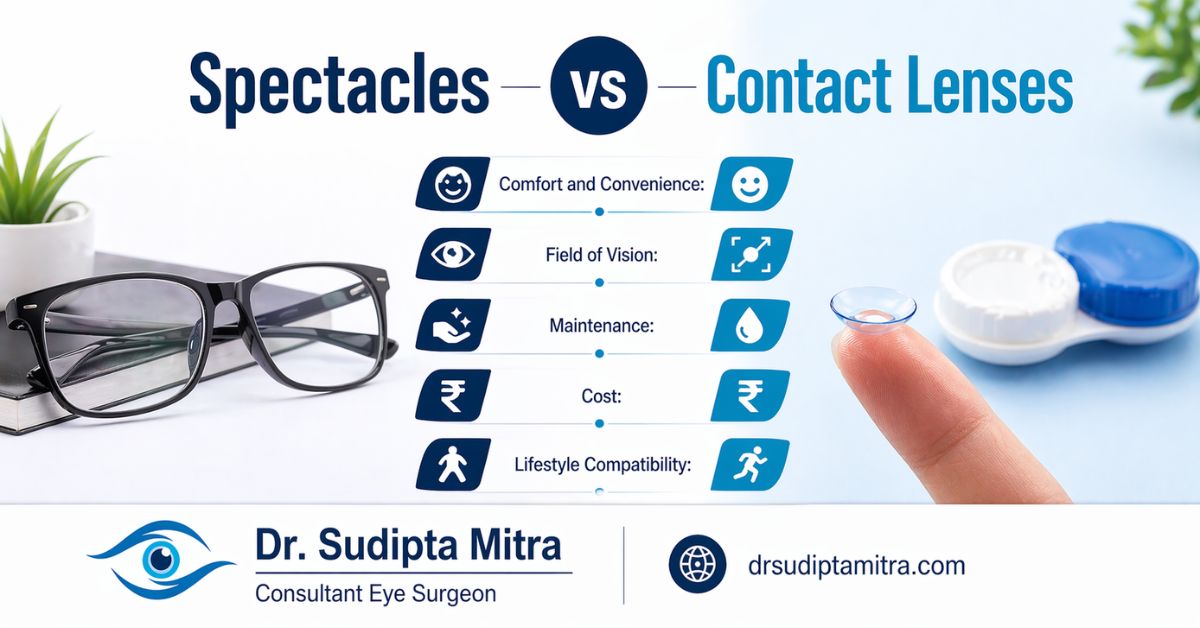
One way to decide is by comparing how spectacles differ from contact lenses. What stands out often depends on personal preference. Vision correction comes in forms that sit on the face or directly on the eye. Each has distinct traits affecting comfort, care, and visibility. How someone lives may influence what works best. Factors like routine activities matter more than assumed. Long-term use reveals strengths in both choices. Clarity matters, yet so does convenience. Some prioritize ease of access, others a frameless look. Daily habits shape suitability over time.
Comfort and Convenience:
Sometimes clarity comes through simplicity – spectacles involve fewer steps. Despite needing placement on the face, they skip routines. Inserting contact lenses happens every day. Removal follows each use. Cleaning is part of their upkeep. Unlike frames, these demand consistent attention.
Field of Vision:
With contact lenses, sight extends further at the edges. Unlike glasses, which can reduce awareness to the sides. Vision feels less interrupted across the full range. Frames create boundaries; thin air does not.
Maintenance:
Lenses worn on the eye demand straightforward upkeep, while those placed directly on the cornea depend on careful handling alongside dedicated cases. Equipment used daily varies greatly when maintenance steps are compared across types.
Cost:
Apart from rare updates, glasses require payment just once. Yet contacts demand repeated spending over time.
Lifestyle Compatibility:
Despite their fragility, glasses often fit well into daily routines. When moving quickly, contact lenses tend to stay out of the way.
Which Choice Works Better for Kids?
When kids have trouble seeing clearly, glasses tend to be the first option chosen. Safety makes them stand out, along with simple daily use and minimal upkeep needed afterward.
Still, when vision issues are more severe or particular eye circumstances exist, doctors might suggest contact lenses for older kids – provided oversight is present.
Adult Choices Compared?
Adults might pick one option due to their daily routine, yet others lean toward what feels familiar. Whether it aligns with habits matters just as much as individual taste. Some follow comfort, while circumstances guide a few. Routine shapes decisions differently across people.
Lenses resting on the nose might suit those spending extended time at screens. Yet movement-focused routines, frequent trips, or wanting an unframed appearance often lead eyes toward thin inserts instead.
Occasionally, individuals choose spectacles during routine days, yet switch to contact lenses when exercising or attending events. While one suits regular tasks, the other fits moments demanding wider movement. Though different in function, each serves distinct daily needs without replacing the other entirely.
Signs You Might Need to See an Eye Doctor?
Should glasses or contacts be considered, a visit to an eye professional comes first. Determining the right choice begins with a thorough check of vision health. What follows depends largely on individual needs, lifestyle factors playing a role too. Clarity, comfort, and daily routine influence what works best. Each person sees differently, so solutions tend to vary. Even small details matter when decisions are made. Vision changes over time; adjustments are expected later. Recommendations rest upon precise measurements taken early. Without proper assessment, choices may lead to discomfort. Long-term eye wellness stays connected to initial advice.
Considering this, some signs to see an eye doctor are:
- What kind of vision focus issue is it?
- The correct lens power
- Whether contact lenses are suitable for your eyes
A choice that fits easily, yet holds safety close. Where life moves simply, this follows without strain. With it, daily rhythm meets gentle support. Not loud, but steady in its place beside you
Whichever choice is made, eye specialists provide direction on correct use along with maintenance.
Tips for Healthy Vision With Glasses or Contacts
Whichever path is taken, proper eye hygiene remains a necessity.
Some helpful tips include:
- Follow your eye specialist’s instructions carefully
- Replace lenses or glasses as recommended
- Avoid excessive screen time without breaks
Good cleanliness matters during contact lens use. While touching lenses, clean hands prevent problems. Always wash before adjustments. Proper care avoids discomfort later. A routine helps keep eyes safe.
Schedule Your Appointment Today:
- Phone: 9830260283
- Online Booking: click here
Final Thoughts
Despite differences in design, both eyeglasses and contacts correct how light focuses in the eye. One relies on external frames; the other sits directly on the surface of the cornea. Ease of use favours glasses, given that they require minimal maintenance. Vision without frame boundaries becomes possible through lenses worn closer to the eye. Physical movement meets fewer restrictions when corrective wear does not rest on the nose or ears.
A visit to a skilled eye professional often brings clarity on suitable options. When advice aligns with consistent attention, sharp eyesight becomes more attainable. Clear sight, paired with mindful routines, supports daily well-being.