Despite its frequency across nations, cataract removal rarely fails. Following the procedure for yourself or someone close, uncertainty may appear about recurrence. After such treatment, can the condition reappear? This thought visits many minds.
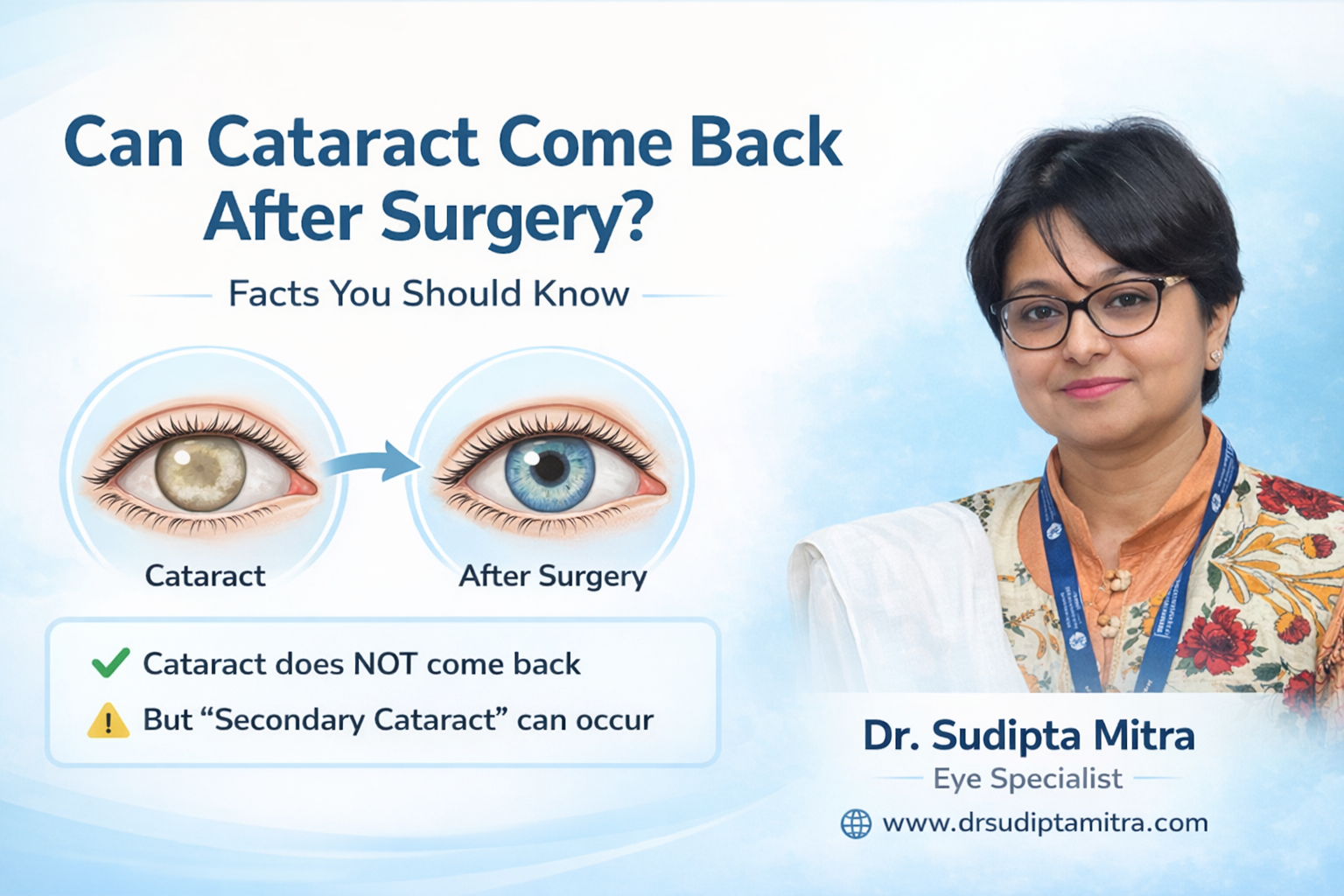
Not again – once taken out, cataracts do not return. Yet something else might mimic their signs later on, tricking patients into thinking the problem resurfaced. This post walks through what actually unfolds post-surgery, peeling back the confusion layer by layer. Clarity follows when myths fade.
Understanding Cataracts?
Cloudy vision begins when the eye’s clear lens turns foggy. Although light still enters, its path scatters unpredictably across the dulled surface. Blurred shapes appear where sharp edges once were seen. Nighttime views grow dimmer than before, without warning. Colours feel less rich, somehow distant. Clarity fades slowly, not all at once.
Cataracts often appear with ageing; however, medical conditions such as diabetes may contribute. Eye trauma introduces another possible cause. Long-standing use of steroids plays a role, too. Inherited traits sometimes lay the foundation. Prior operations on the eyes might lead to changes over time.
Among known methods, surgical intervention stands as the sole option that produces results when addressing cataracts.
Steps in Cataract Surgery?
Today’s cataract treatment involves removing the hazy eye lens. A transparent man-made replacement, known as an IOL, takes its place during the process. Though once complex, this operation now proceeds with minimal risk due to refined techniques used across medical centres worldwide.
A widely applied method at present involves phacoemulsification. This process functions by breaking down tissue using ultrasonic energy while fluid continuously irrigates the area, maintaining stability throughout the operation
A small cut appears on the surface of the eye.
Fragments of the hazy lens are separated using ultrasound waves. A device directs high-frequency sound to dissolve the obstructed material slowly. Tiny portions drift free as vibrations dislodge hardened clusters. Dispersal occurs without slicing through surrounding tissue. The remains exit gently via gentle suction afterwards.
The pieces get taken away.
A foldable artificial lens is inserted.
A synthetic lens remains free of clouding. Hence, after the extraction of the original lens, regrowth becomes impossible.
Cataracts Do Not Return After Surgery?
A clouded lens does not return once removed. The implanted device stays clear over time. Recovery brings stable vision for most people. Changes later are usually due to other eye shifts. Each case follows its own path forward.
Once the eye’s clouded lens is taken out through surgery, nothing remains that could turn foggy once more. Because a synthetic replacement takes its place, recurrence of such clouding cannot happen.
Still, some individuals notice unclear eyesight long after the procedure – months, sometimes years. Such changes are commonly seen as a sign that cataracts have come back.
Posterior Capsule Opacification PCO Explained
A frequent explanation for perceived cataract return involves something known as Posterior Capsule Opacification. This occurrence often misleads individuals into believing the original issue has reappeared.
Following removal of the clouded lens, the surgeon retains a delicate layer known as the posterior capsule. Its presence offers the support necessary for positioning the replacement lens correctly. Though cleared of obstruction, that thin sac remains intact by design.
This cloudiness may develop gradually, driven by leftover cells multiplying inside the capsule. Vision then begins to dim once more, much like it did before the original lens issue arose.
This resemblance leads to PCO frequently being labelled a “secondary cataract,” though in reality, it does not qualify as one.
How Often Does PCO Occur?
Following cataract surgery, a notable number of individuals experience Posterior Capsule Opacification. Research indicates rates between 20 and 30 per cent over several years. Factors such as surgical technique, lens type, or patient age can influence the likelihood:
- Age
- Type of intraocular lens used
- Surgical technique
- Individual healing response
- Children are more likely to develop PCO compared to adults.
Symptoms of Posterior Capsule Opacification
Possibly, signs linked to PCO mirror what one might see with cataracts – leading some individuals toward uncertainty. Examples could involve:
- Blurred or hazy vision
- Glare or halos around lights
- Difficulty reading
- Reduced contrast sensitivity
- Trouble driving at night
Following a successful cataract procedure, new visual changes might appear. These do not signal a return to the original condition. Instead, posterior capsule opacification may be present. That differs entirely from cataract recurrence.
PCO Treatment Options
Fortunately, PCO responds well to treatment through a brief, straightforward method using YAG laser capsulotomy. This approach causes minimal discomfort while delivering reliable results efficiently. The process involves precise targeting without invasive steps, ensuring patient comfort throughout. Recovery follows naturally with little need for extended care afterwards.
During this procedure:
Fewer cuts appear on the surface. Where tools enter, there remains no opening.
A tiny hole forms in the hazy membrane, made by light energy. The beam precisely shapes an entry point where vision clears. Light cuts without touch, altering only what must change. Clarity follows after the barrier parts. Invisible rays adjust the clouded surface gently.
Once more, visibility returns without obstruction. Right away, sight begins to get clearer.
Typically, the process lasts several minutes, performed without requiring an overnight stay. Following it, many individuals return to regular routines immediately.
Following a YAG laser capsulotomy, posterior capsule opacification tends not to reappear. Crucially, the effect typically lasts without recurrence.
What Happens After Cataract Surgery?
Even though cataract removal carries low risk, certain shifts in eyesight can occur without connection to the original condition. Such effects might involve:
- Dry eyes
- Retinal problems
- Glaucoma
- Macular degeneration
- Refractive changes
Should eyesight grow hazy following the operation, a specialist must be seen to identify the reason – never presume cataracts are back. Though clarity fades, conclusions should wait until examination occurs instead of jumping to common beliefs. After healing begins, changes may signal something minor, yet confirmation comes only through assessment by trained professionals.
Preventing Posterior Capsule Opacification
Though prevention of PCO is not guaranteed, some elements lower its likelihood. Risk diminishes when specific conditions are met. Certain influences play a role in decreasing chances. Under particular circumstances, occurrences become less frequent. A reduced probability emerges with careful management. Some aspects that contribute to fewer cases appearing are:
- Advanced surgical techniques
- High-quality intraocular lenses
- Regular follow-up visits
- Proper post-operative care
One way to reduce risks is by selecting a skilled ophthalmologist while keeping follow-up appointments on track. Though expertise matters, consistent monitoring after surgery plays an equal role. A careful approach begins well before the procedure itself unfolds. Oversight at each phase helps prevent unwanted outcomes later. Timing of visits, paired with professional background, shapes overall safety. Unplanned issues become less likely when both factors align properly.
Signs That Mean You Might Need Medical Advice?
You should consult your eye specialist if you experience:
- Sudden vision loss
- Gradual blurring after clear vision post-surgery
- Increased glare or halos
- Eye pain or redness
- Flashes or floaters
When signs appear early, care follows without delay – avoiding later issues. Complications fade if detection comes first through prompt recognition of symptoms.
Myths People Believe About Cataracts Coming Back
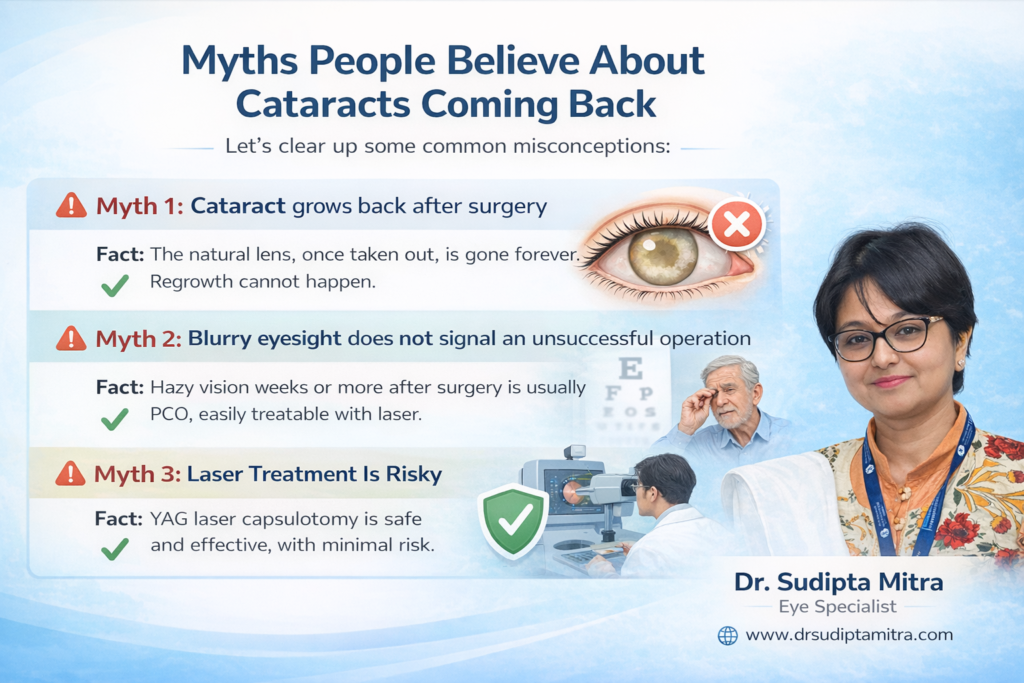
Let’s clear up some common misconceptions:
Myth 1: Cataract grows back after surgery
The natural lens, once taken out, stays gone forever. Removal means it will never return. Its absence remains fixed over time. Regrowth does not happen under any condition.
Myth 2: Blurry eyesight does not signal an unsuccessful operation
A common cause of hazy eyesight weeks or more after surgery tends to be posterior capsule opacification – this responds well to straightforward care. Though timing varies, clouded sight appearing later often links to this condition, correctable without complexity.
Myth 3: Laser Treatment Is Risky
YAG laser capsulotomy indeed carries little danger. Safety marks this treatment, which does not require cutting. Rare are complications when using such a method. No invasion occurs during the process, making it widely accepted. Minimal chance of harm defines its overall profile.
Schedule Your Appointment Today:
- Phone: 9830260283
- Online Booking: click here
Final Thoughts
After surgery, does a cataract return? Not possible. Removal of the clouded natural lens eliminates recurrence. An artificial replacement takes its place permanently. This new lens will not form a cataract later. The condition stays gone for good. Recovery brings lasting clarity without regrowth risk.
Later on, some individuals encounter Posterior Capsule Opacification – an ordinary issue resembling cataracts, yet fully manageable. This state responds well to a brief laser treatment, offering reliable results without complexity.
A shift in eyesight following cataract removal does not require alarm. Seek advice from an eye professional to review the situation carefully. Clear sight afterwards often remains within reach, given current methods and skilled oversight.
Regular eye exams, daily habits that support wellness, followed by quick medical responses when needed – these form the core of lasting sight and improved living. A clear vision into later years begins with consistent attention earlier on. When small issues receive proper care early, future difficulties often lessen. Well-maintained eyes adapt better over time simply because they are monitored. Prevention, paired occasionally with expert guidance, keeps function steady across decades.
Living well often depends on how clearly one sees. A sharp view of the world shapes daily experience more than mere eyesight suggests.