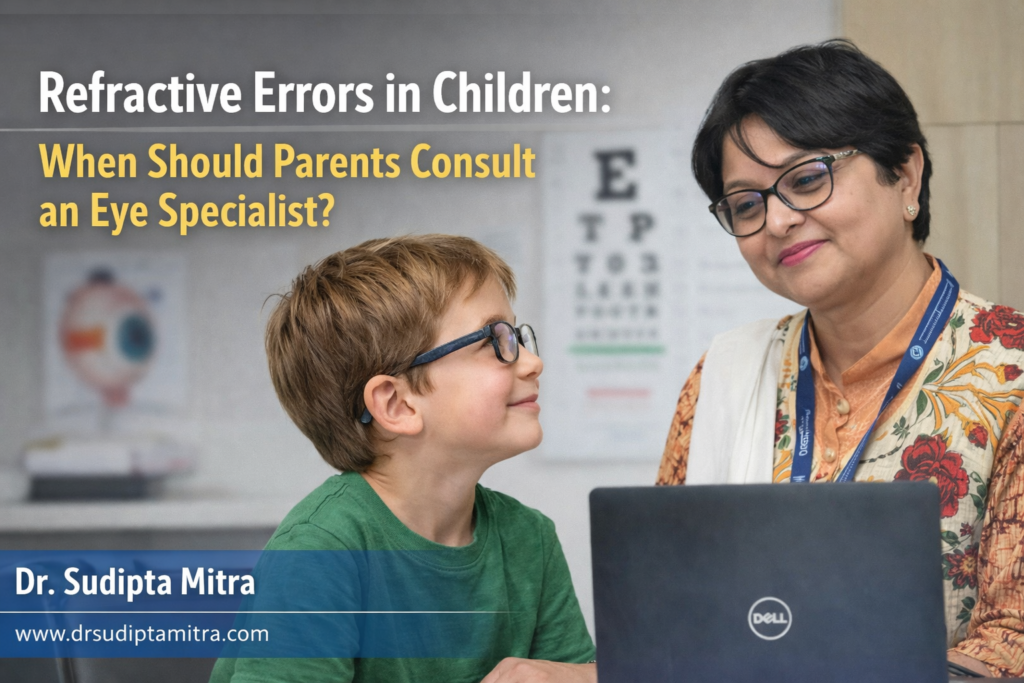
Clear sight matters greatly as young minds develop. Reading, engaging in class tasks, and running during recess – all rely on strong visual ability. Still, unseen focusing issues affect many young people. Because young children may lack words for blurry or strained vision, these difficulties remain hidden for months.
A child’s ability to see clearly often depends on how well refractive issues are managed early. Awareness of these vision changes allows caregivers to decide if a visit to the eye expert is needed. Proper development may follow when timing and understanding align. What matters most shows up not in speed but in careful observation.
Understanding Refractive Errors
A shift in how light enters the eye often disrupts clear sight. Vision becomes less sharp due to misfocused rays landing off target. Shape differences in the eyeball, front surface, or focusing part play a role here.
Most kids who struggle to see clearly have what is known as refractive errors. Early detection makes correction possible – through eyeglasses, contacts, or alternative methods.
Common Refractive Errors Found in Children
Myopia (Nearsightedness)
Seeing close things sharply while distant ones appear blurry defines myopia in young individuals. Take reading a book – it often presents no trouble, yet viewing classroom writing on far walls becomes hard. Clear near vision exists alongside hazy sight when looking farther away. School settings show this well: printed pages stay sharp, but board details fade. Difficulty increases with distance, even though the immediate surroundings remain distinct.
More people are experiencing this condition now than before, partly because of prolonged exposure to screens. Outdoor activities have declined over recent years, contributing further. Genetics also play a role, influencing susceptibility in certain individuals.
Symptoms may include:
- Squinting to see distant objects
- Sitting very close to the television
- Difficulty seeing the classroom board
- Frequent eye rubbing
Hyperopia (Farsightedness)
A condition arises where faraway visuals appear sharper than those near. When young ones have trouble seeing things up close, schoolwork such as handwriting or book study becomes difficult at times.
A slight farsightedness often appears in early childhood, fading with ocular development. When the condition becomes more pronounced, visual difficulties may arise – professional observation then becomes necessary.
Common symptoms include:
- Eye strain during reading
- Headaches after close work
- Difficulty concentrating on near tasks
Astigmatism
A different curve in the eye’s front surface or inner lens brings about astigmatism, leading to unclear or stretched eyesight regardless of distance. Shape variations interfere with how light focuses, making images appear soft or doubled across near and far views. Uneven curvature alters visual clarity universally, affecting focus whether close or distant.
Astigmatism can cause blurred vision at various distances in young people. While some struggle to see close items clearly, others find faraway things out of focus. Vision challenges might begin early, affecting daily tasks without obvious signs. What appears as daydreaming could instead be an effort to interpret unclear images. Without correction, these visual disruptions tend to persist into later years.
Symptoms include:
- Blurred or distorted vision
- Frequent squinting
- Eye strain or headaches
Amblyopia (Lazy Eye)
A condition distinct from optical imperfections, amblyopia frequently arises alongside uncorrected visual discrepancies. Vision fails to form fully in one eye due to dominant processing by the brain through its counterpart.
A child’s weaker eye may lose sight permanently if amblyopia receives no care. Unaddressed early on, the condition often results in lasting visual decline. Without intervention at a young age, normal development falters. Vision fails to strengthen under such conditions. Permanent impairment becomes likely without timely support. The outcome depends heavily on how soon treatment begins.
Early detection matters because it can catch problems before they grow. Should eyesight be impaired, a student’s progress at school often declines without a clear cause being noticed. When focusing proves difficult, some young people are seen as disengaged – yet blurred sight might be shaping their struggles instead. When detection happens early, adjustments follow without delay, avoiding later issues while supporting healthy vision growth. Better results often come if treatment begins quickly after identifying the problem.
Warning Signs Parents Should Notice
It is common for children to adjust quietly to blurred sight, saying nothing. Because of this, attention from adults around them becomes key – signs can appear subtly. Observers might notice small changes in behaviour or focus. These hints, when pieced together, sometimes point to how clearly the world is seen. Refractive issues do not always announce themselves loudly. A shift in posture during reading could matter. So could frequent blinking under bright light. Even slight head tilts while watching screens may signal strain. What seems like a distraction may instead be difficulty seeing. Awareness by caregivers helps catch what words cannot express.
Among typical indicators are:
- Frequent squinting
- Sitting too close to the TV or holding books very close
- Complaints of headaches or eye strain
- Excessive blinking
- Difficulty concentrating on schoolwork
- Covering one eye while reading
- Poor academic performance
- Avoiding reading or detailed tasks
- Tilting the head while focusing
Should such symptoms appear, a visit to the eye specialist could become necessary. When changes in vision occur, professional advice might be needed. In case discomfort continues, seeking help makes sense. With persistent issues, consultation often follows. After repeated problems show up, seeing a specialist is common.
Parents Seeking Eye Specialist Advice?
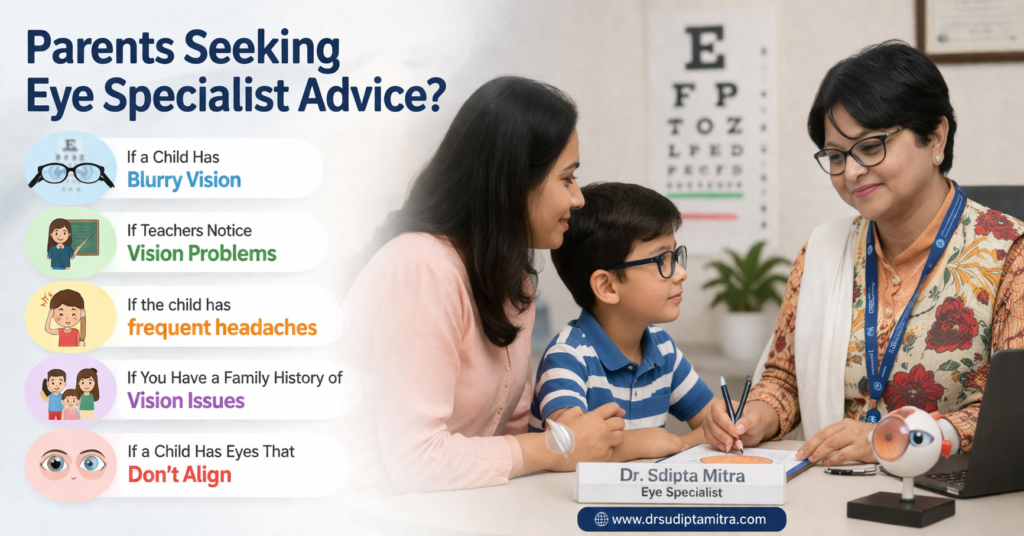
It is unwise to delay an eye exam until problems become visible. Early detection of vision issues often depends on routine visits to the specialist.
Here are some situations when consulting an eye specialist becomes necessary:
If a Child Has Blurry Vision
A person reporting unclear eyesight, during close work or when viewing faraway items, requires attention. Though the activity differs, visual difficulty signals a need for assessment. When letters on a page appear smudged or road signs lose sharpness, evaluation becomes necessary. Reading strain might hint at broader issues. Distance focus fading could indicate underlying changes. Clarity loss, regardless of cause, must not be dismissed. Each instance deserves examination.
If Teachers Notice Vision Problems
A child may sit forward one day, then move back the next. Teachers tend to observe these shifts over time. Difficulty reading what is posted at the front sometimes shows in posture or repeated adjustments. Changes in where a student chooses to sit can signal vision challenges. What seems like restlessness might reflect an effort to focus on distant text. Small patterns add up in classroom routines.
If the child has frequent headaches
Following text on screens might bring about head discomfort when vision issues remain unaddressed. One reason could involve focusing on problems that glasses would correct. Strain often builds slowly during close work if optical clarity is lacking. Visual fatigue may show up only after long sessions with digital displays. Difficulty adjusting focus sometimes underlies persistent pressure behind the eyes.
If You Have a Family History of Vision Issues
A child whose mother or father has trouble seeing clearly may also face increased chances of such vision issues. When one parent struggles with focusing light correctly inside the eye, the likelihood rises slightly for their offspring. Vision problems tied to family history often appear across generations, especially if both parents are affected. In some cases, inherited traits play a role in how eyes develop over time. Genetic patterns contribute, though the environment can influence outcomes too.
If a Child Has Eyes That Don’t Align
When one eye turns differently from the other, it might signal a visual problem needing prompt evaluation. Not aligned correctly, the eyes can suggest underlying conditions worth assessing without delay. A shift in gaze direction could reflect issues best examined early. Misalignment sometimes points to disturbances within the visual system, demanding timely review.
Eye Check-Up Timing for Kids
Throughout childhood, eye experts suggest routine checkups for eyesight to catch issues quickly. Though often overlooked, these exams help identify concerns before they grow. Where one might assume vision is fine, subtle changes can still occur. Because clarity matters, screenings remain a steady part of health care. Even without symptoms, children benefit from scheduled reviews now and then.
A typical suggestion covers these points:
- At approximately half a year old, an infant receives their initial eye check
- Follow-up appointment scheduled when the child reaches three years of age
- At age five or six, children typically begin schooling
- Once every one or two years throughout childhood education
Still, those young ones facing sight challenges might require visits more often. Yet regular monitoring could become necessary under such conditions. While problems persist, oversight tends to increase in frequency. Even so, ongoing difficulties demand closer attention at shorter intervals. Though uncommon, certain cases call for tighter supervision of eye health.
Diagnosing refractive errors
A child’s vision is examined through various methods by eye doctors. Among these could be:
Visual acuity test
A simple check measures how light bends through your eye. This measurement shows what strength lenses will work best. Vision clarity depends on accurate results here. Lens details come from focusing patterns seen during testing of eye alignment tests.
Treatment Options for Refractory Errors in Kids
Once identified, many vision issues respond well to simple treatments.
Prescription Glasses
Glasses remain a frequent choice when addressing refractive issues in young individuals. Light reaches the retina with greater precision because of them, resulting in clearer sight right away.
Contact Lenses
With correct oversight, older kids and teens can wear contact lenses when cleanliness is maintained.
Vision Therapy
Beyond typical play, certain activities can support visual tracking skills in young ones. Movement-based tasks might strengthen how the eyes work together during daily routines. For some kids, practice with aiming or following objects brings subtle gains. Not every child needs this type of input, yet it exists as an option. Focus development varies widely among learners at early stages.
Lifestyle Adjustments
Encouraging outdoor play and limiting screen time may help reduce the progression of myopia in children.
Tips For Protecting Children’s Eye Health
Parents can take several steps to support healthy vision in children:
- Encourage at least 1–2 hours of outdoor activity daily
- Limit excessive screen time
- Ensure proper lighting while studying
- Maintain a balanced diet rich in vitamins A, C, and E
- Eye checkups should happen at consistent intervals
A strong routine often supports clear eyesight over time. Vision stays sharper when daily choices focus on well-being. With consistent care, the eyes respond positively. Over months, small actions add up quietly. Clarity may last longer under steady conditions.
Schedule Your Appointment Today:
- Phone: 9830260283
- Online Booking: click here
Final Thoughts
Children often experience refractive issues, yet outcomes improve significantly with timely identification. Because verbalising visual discomfort can be difficult for young ones, subtle shifts in conduct might signal underlying concerns. Awareness among caregivers plays a role in recognising such patterns before they progress further. Unusual head tilts or squinting during daily tasks sometimes point toward undetected challenges needing attention.
Eye exams on a routine basis – most crucial in the youngest children and those entering school – may detect issues before any impact on growth or education begins.
Should a child have trouble seeing clearly, complain of head pain, narrow their eyes often, or struggle at school, visiting an eye expert soon becomes necessary. Clear sight later on depends heavily upon how quickly issues are found and managed correctly. Reaching expected levels in class and among peers is closely to timely care received during early years.
A healthy vision now sets the foundation for better sight ahead. Starting early makes a lasting difference down the road. Clear eyes today often mean fewer challenges later on. Future comfort begins with present care. Steps taken at home now support stronger visual health over time.